Skip to content
To become a towing service provider, an individual or entity must first secure a vehicle that meets regional safety standards and obtain a Commercial Driver’s License (CDL) if the truck exceeds specific weight ratings. Business owners must register their company with state agencies, acquire a USDOT number, and purchase specialized insurance policies including liability and on-hook coverage. State-specific permits and background checks are often mandatory before a provider can legally remove vehicles from public or private property.
Starting this type of business requires a blend of mechanical knowledge, logistical planning, and strict adherence to safety regulations. This guide outlines the necessary certifications, equipment costs, and operational requirements for those entering the vehicle recovery industry. American Towing provides this overview based on industry standards and operational experience to assist prospective owners in understanding the professional requirements of the field.
Professional Licensing and Driver Requirements
The first step in entering this industry involves meeting driver qualification standards. Most states require drivers of heavy recovery vehicles to hold a Commercial Driver’s License. While a standard driver’s license might suffice for light-duty trucks weighing 26,000 pounds or less, many professional tow trucks exceed this limit when carrying a load. According to the Federal Motor Carrier Safety Administration, drivers must pass both knowledge and skills tests to obtain a CDL.
Beyond the license itself, many jurisdictions require a specific towing endorsement or a separate tow truck operator certificate. This often involves a criminal background check and a review of the driver’s motor vehicle record. Professionalism in this field starts with a clean driving history, as insurance companies heavily weigh this factor when determining premiums.
Business Registration and Legal Structure
Establishing a legal entity protects personal assets from business liabilities. Most providers choose between a Limited Liability Company (LLC) or a corporation. A guide from the U.S. Small Business Administration explains that an LLC is often preferred for smaller operations because it offers liability protection with less administrative complexity than a corporation.
Once the entity is formed, the business must apply for a federal Employer Identification Number (EIN) for tax purposes. Additionally, any business operating a commercial vehicle across state lines or with a vehicle weight over certain thresholds must register for a USDOT number. This number serves as a unique identifier for safety audits and inspections.
Necessary Equipment and Initial Investment
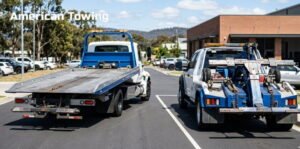
Choosing the right equipment determines what type of calls the business can handle. A flatbed truck is generally the most versatile option because it keeps the entire vehicle off the ground, reducing the risk of damage to the customer’s car. Conversely, wheel-lift trucks are more maneuverable in tight city spaces or parking garages.
The towing and recovery industry has seen steady growth, with market data showing annual revenues exceeding $8 billion in the United States. This growth is driven by increasing vehicle ages and higher traffic volumes. Because the initial investment is high, new providers should compare the costs of new versus used equipment.
Equipment Comparison and Costs
| Equipment Type | Best Application | Estimated New Cost |
|---|---|---|
| Flatbed (Roll-back) | Luxury cars, AWD vehicles, long-distance | $85,000 – $160,000 |
| Wheel-Lift Truck | Repossessions, short-distance, city towing | $65,000 – $115,000 |
| Integrated Tow Truck | Heavy-duty recovery (Buses, Semis) | $250,000 – $600,000 |
| Hook and Chain | Scrap or junk car removal only | $40,000 – $70,000 |
Bonus Tip: When buying a used truck, always inspect the hydraulic systems and winches first. Replacing a hydraulic pump or a worn cable can cost thousands of dollars shortly after purchase.
Insurance Coverage Requirements
Standard auto insurance is insufficient for a recovery business. Providers must carry specific policies that protect both the business and the vehicles being transported.
- Liability Insurance: Covers bodily injury and property damage if the tow truck causes an accident.
- On-Hook Coverage: Protects the customer’s vehicle while it is being towed or lifted.
- Garagekeepers Insurance: Necessary if the business stores towed vehicles in a lot overnight.
The National Association of Insurance Commissioners notes that commercial premiums are significantly higher than personal ones due to the increased risks associated with heavy machinery and roadside operations.
Operational Logistics and Dispatching
A towing business only functions if it can reach customers quickly. This requires a reliable dispatch system. Small operations might start with a single mobile phone, but growing businesses usually adopt specialized software to track truck locations and manage invoices.
Setting a service area is also important. Operating too far from a home base increases fuel costs and wear on the vehicle. Most successful providers focus on a 20-to-30-mile radius to maximize efficiency and response times.
Bonus Tip: Consider joining motor club sub-contractor networks. While these often pay lower rates than private calls, they provide a steady stream of volume for new businesses trying to establish themselves.
Things to Consider Before Making a Decision
Before investing in a truck and leasing a lot, evaluate these factors:
- Local Competition: Research how many providers already serve the area. A saturated market makes it difficult to secure police rotation or motor club contracts.
- Zoning Laws: Ensure the intended storage lot is zoned for commercial vehicle storage. Many residential or light commercial areas prohibit towing yards.
- Work Schedule: Towing is a 24/7 industry. Operators must be prepared for late-night calls in poor weather conditions.
- Maintenance Costs: Tow trucks require more frequent maintenance than standard vehicles. Tires, brakes, and hydraulic fluids must be checked weekly.
Common Questions About Starting a Towing Business
New entrants often ask about the profitability and specific legalities of the industry. Many want to know if they can start with a used pickup truck and a tow dolly. While possible for very light work, most professional contracts require a dedicated tow truck with specific safety ratings.
Another common concern is how to get on police rotation lists. These lists are often the primary source of income for recovery businesses. Getting on a list usually requires a physical inspection of the truck and the storage facility by local law enforcement.
FAQ About Towing Services
Is a CDL always required for tow truck drivers?
A CDL is required if the Gross Vehicle Weight Rating (GVWR) of the truck, or the combined weight of the truck and its load, exceeds 26,000 pounds. Even if the truck is smaller, some states require a CDL for any vehicle transporting hazardous materials or for specific commercial activities.
How much money is needed to start a towing business?
A small operation with one used truck and basic insurance may start with $20,000 to $50,000. However, starting with a new flatbed and a dedicated storage lot can easily exceed $150,000 in initial capital.
What is on-hook insurance?
On-hook insurance is a specific coverage that pays to repair or replace a vehicle you do not own if it is damaged while you are towing it. This covers incidents like collisions, fire, or theft while the vehicle is attached to the truck.
Can I run a towing business from my home?
This depends on local zoning ordinances. Most cities prohibit the storage of multiple commercial vehicles or “wrecked” cars in residential driveways. A commercial storefront or industrial lot is usually necessary.
How do towing companies set their rates?
Rates are typically split into a “hook-up fee” and a “per-mile fee.” Local regulations often cap these fees for non-consensual tows, such as those ordered by the police or for parking violations.
Summary of Towing Service Requirements
Becoming a professional in this field requires a commitment to safety and a clear understanding of state and federal laws. Success depends on selecting the right equipment, securing comprehensive insurance, and maintaining a clean driving record. Business owners should focus on building relationships with local repair shops, law enforcement, and motor clubs to ensure a consistent flow of work. Carefully evaluate the high startup costs against the projected volume in your specific region before purchasing assets.
Contact American Towing for Information
American Towing operates as a professional recovery service dedicated to industry excellence. For questions regarding professional standards or equipment requirements, contact the office at 435-231-1116. Inquiries can also be sent via email to alansudweekstrucking@gmail.com for more detailed information. American Towing prioritizes safety and professional conduct in every aspect of the vehicle recovery process.
Sources
- Federal Motor Carrier Safety Administration – Official government guidelines on commercial driver license requirements and federal safety standards.
- U.S. Small Business Administration – A comprehensive guide on selecting legal structures for new businesses in the United States.
- IBISWorld – Market research data providing economic trends and revenue statistics for the towing and recovery industry.
National Association of Insurance Commissioners – Regulatory information regarding commercial auto insurance and liability coverage standards.