Skip to content
Summarize with
Starting a towing business involves much more than purchasing a tow truck and accepting service calls. Professional towing companies operate in a highly regulated industry where safety, licensing, insurance, and proper equipment all play an important role. Every recovery job carries responsibility, whether assisting a stranded driver, transporting a disabled vehicle, or clearing an accident scene. Building a successful operation requires careful planning before the first truck ever goes into service.
New business owners should understand that requirements vary depending on the state, the type of vehicles being towed, and whether the company plans to provide light-duty, medium-duty, or heavy-duty recovery services. In addition to legal registration, operators must invest in reliable equipment, secure commercial insurance, develop dispatch procedures, and maintain vehicles according to safety standards. These early decisions directly affect the company’s ability to earn contracts, satisfy customers, and operate legally.
While the startup costs can be significant, proper preparation reduces many of the challenges faced by new towing businesses. Learning the licensing process, understanding equipment options, and planning operating expenses helps create a stronger foundation for long-term growth. The following sections explain the essential steps involved in becoming a professional towing service provider.
Professional Licensing and Driver Requirements
Before offering commercial towing services, operators must meet the licensing requirements established by federal, state, and local authorities. The exact qualifications depend on the type of tow truck being operated and the services the business intends to provide.
Many heavy-duty tow trucks require drivers to hold a Commercial Driver’s License (CDL), particularly when the truck or combined vehicle weight exceeds legal thresholds. Obtaining a CDL involves passing written knowledge examinations, practical driving tests, and medical qualification requirements designed to verify that drivers can safely operate large commercial vehicles.
Some states also require tow truck operators to obtain additional permits, certifications, or towing endorsements before performing vehicle recoveries. These requirements may include criminal background checks, driving record reviews, and periodic license renewals. Insurance providers frequently review an operator’s driving history as well, making a clean record beneficial for both licensing and insurance costs.
Beyond legal qualifications, successful towing professionals benefit from training in vehicle recovery techniques, accident scene safety, customer communication, and proper equipment operation. These skills help reduce operational risks while improving the quality of service provided to customers.
Business Registration and Legal Structure
After meeting driver qualifications, the next step is establishing the business as a legal entity. Many towing companies operate as a Limited Liability Company (LLC) because it separates personal assets from business liabilities while offering a relatively straightforward management structure. Others may choose a corporation depending on their long-term business goals and ownership structure.
Following business registration, owners typically apply for an Employer Identification Number (EIN) to manage tax obligations and payroll responsibilities. Businesses operating commercial vehicles may also need a USDOT number if their operations fall within applicable federal transportation regulations. This identification allows regulatory agencies to monitor commercial vehicle safety, inspections, and compliance requirements.
Business owners should also verify local zoning regulations before selecting a storage yard or office location. Some municipalities restrict commercial vehicle storage in certain areas or require additional operating permits before towing businesses can begin serving customers. Addressing these requirements early helps avoid delays once the business is ready to begin operations.
Necessary Equipment and Initial Investment
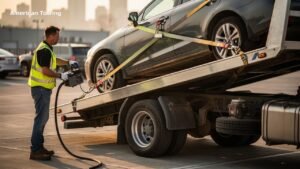
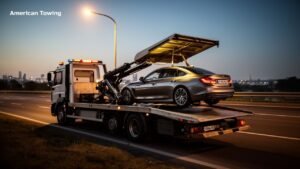
Choosing the right equipment determines what type of calls the business can handle. A flatbed truck is generally the most versatile option because it keeps the entire vehicle off the ground, reducing the risk of damage to the customer’s car. Conversely, wheel-lift trucks are more maneuverable in tight city spaces or parking garages.
The towing and recovery industry has seen steady growth, with market data showing annual revenues exceeding $8 billion in the United States. This growth is driven by increasing vehicle ages and higher traffic volumes. Because the initial investment is high, new providers should compare the costs of new versus used equipment.
Equipment Comparison and Costs
| Equipment Type | Best Application | Estimated New Cost |
|---|---|---|
| Flatbed (Roll-back) | Luxury cars, AWD vehicles, long-distance | $85,000 – $160,000 |
| Wheel-Lift Truck | Repossessions, short-distance, city towing | $65,000 – $115,000 |
| Integrated Tow Truck | Heavy-duty recovery (Buses, Semis) | $250,000 – $600,000 |
| Hook and Chain | Scrap or junk car removal only | $40,000 – $70,000 |
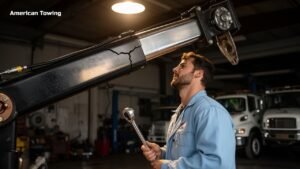
Bonus Tip: When buying a used truck, always inspect the hydraulic systems and winches first. Replacing a hydraulic pump or a worn cable can cost thousands of dollars shortly after purchase.
Insurance Coverage Requirements
Standard auto insurance is insufficient for a recovery business. Providers must carry specific policies that protect both the business and the vehicles being transported.
- Liability Insurance: Covers bodily injury and property damage if the tow truck causes an accident.
- On-Hook Coverage: Protects the customer’s vehicle while it is being towed or lifted.
- Garagekeepers Insurance: Necessary if the business stores towed vehicles in a lot overnight.
The National Association of Insurance Commissioners notes that commercial premiums are significantly higher than personal ones due to the increased risks associated with heavy machinery and roadside operations.
Operational Logistics and Dispatching
A towing business only functions if it can reach customers quickly. This requires a reliable dispatch system. Small operations might start with a single mobile phone, but growing businesses usually adopt specialized software to track truck locations and manage invoices.
Setting a service area is also important. Operating too far from a home base increases fuel costs and wear on the vehicle. Most successful providers focus on a 20-to-30-mile radius to maximize efficiency and response times.
Bonus Tip: Consider joining motor club sub-contractor networks. While these often pay lower rates than private calls, they provide a steady stream of volume for new businesses trying to establish themselves.
Things to Consider Before Making a Decision
Before investing in a truck and leasing a lot, evaluate these factors:
- Local Competition: Research how many providers already serve the area. A saturated market makes it difficult to secure police rotation or motor club contracts.
- Zoning Laws: Ensure the intended storage lot is zoned for commercial vehicle storage. Many residential or light commercial areas prohibit towing yards.
- Work Schedule: Towing is a 24/7 industry. Operators must be prepared for late-night calls in poor weather conditions.
- Maintenance Costs: Tow trucks require more frequent maintenance than standard vehicles. Tires, brakes, and hydraulic fluids must be checked weekly.
Common Questions About Starting a Towing Business
New entrants often ask about the profitability and specific legalities of the industry. Many want to know if they can start with a used pickup truck and a tow dolly. While possible for very light work, most professional contracts require a dedicated tow truck with specific safety ratings.
Another common concern is how to get on police rotation lists. These lists are often the primary source of income for recovery businesses. Getting on a list usually requires a physical inspection of the truck and the storage facility by local law enforcement.
FAQ About Towing Services
Is a CDL always required for tow truck drivers?
A CDL is required if the Gross Vehicle Weight Rating (GVWR) of the truck, or the combined weight of the truck and its load, exceeds 26,000 pounds. Even if the truck is smaller, some states require a CDL for any vehicle transporting hazardous materials or for specific commercial activities.
How much money is needed to start a towing business?
A small operation with one used truck and basic insurance may start with $20,000 to $50,000. However, starting with a new flatbed and a dedicated storage lot can easily exceed $150,000 in initial capital.
What is on-hook insurance?
On-hook insurance is a specific coverage that pays to repair or replace a vehicle you do not own if it is damaged while you are towing it. This covers incidents like collisions, fire, or theft while the vehicle is attached to the truck.
Can I run a towing business from my home?
This depends on local zoning ordinances. Most cities prohibit the storage of multiple commercial vehicles or “wrecked” cars in residential driveways. A commercial storefront or industrial lot is usually necessary.
How do towing companies set their rates?
Rates are typically split into a “hook-up fee” and a “per-mile fee.” Local regulations often cap these fees for non-consensual tows, such as those ordered by the police or for parking violations.
Summary of Towing Service Requirements
Becoming a professional in this field requires a commitment to safety and a clear understanding of state and federal laws. Success depends on selecting the right equipment, securing comprehensive insurance, and maintaining a clean driving record. Business owners should focus on building relationships with local repair shops, law enforcement, and motor clubs to ensure a consistent flow of work. Carefully evaluate the high startup costs against the projected volume in your specific region before purchasing assets.
Contact American Towing for Information
American Towing operates as a professional recovery service dedicated to industry excellence. For questions regarding professional standards or equipment requirements, contact the office at 435-231-1116. Inquiries can also be sent via email to alansudweekstrucking@gmail.com for more detailed information. American Towing prioritizes safety and professional conduct in every aspect of the vehicle recovery process.
Sources
- Federal Motor Carrier Safety Administration – Official government guidelines on commercial driver license requirements and federal safety standards.
- U.S. Small Business Administration – A comprehensive guide on selecting legal structures for new businesses in the United States.
- IBISWorld – Market research data providing economic trends and revenue statistics for the towing and recovery industry.
National Association of Insurance Commissioners – Regulatory information regarding commercial auto insurance and liability coverage standards.