Skip to content
Summarize with
You’re stuck. Your wheels spin uselessly in mud. The car won’t move forward or backward. This is the moment most drivers realize they don’t actually know what service to call.
American Towing Service handles everything from muddy ranch roads to canyon recoveries that require specialized equipment. The difference between knowing what you need and guessing? About 4 hours of your time and potentially thousands in vehicle damage.
Vehicle recovery safety guidelines of National Towing Safety Council present the ways to prevent injuries during recovery operations: certified attachment points and controlled tension are necessary.
When To Use A Winch For Vehicle Recovery
A winch-out isn’t moving your car somewhere. It is pulling it free from a spot it cannot escape on its own. That distinction matters more than you should think.
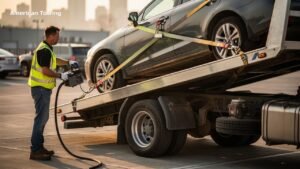
The operator shows up with a truck that has a motorized drum. Cable wraps around that drum. Steel or synthetic rope, depending on the situation. They hook that cable to your vehicle’s frame—not the bumper, because bumpers tear off. Not the hitch, because that’s for towing. A specific point engineered to handle recovery loads.
Then they apply power. Slowly. The cable winds up. Your vehicle starts moving. The skill is in how they do it. Too fast and you snap something. Too slow and nothing happens. The right operator knows the exact moment when your car is going to break free and when to ease off so you don’t jerk the suspension apart.
Before any of this happens, the good ones walk around your vehicle. They check how deep you’re actually stuck. They look at the ground. They figure out where they’re going to position the tow truck so it doesn’t slide toward you instead of pulling you away. This takes 5 minutes. It prevents most disasters.
Here’s what separates professionals from guys with a winch in their truck: They stop if something feels wrong. Cable tension suddenly changes. The ground shifts. A shackle slips. Instead of pushing through and hoping for the best, they shut it down. They reassess. That’s experience. That’s why you want someone who’s done this 500 times, not 5.
Common Reasons For Vehicle Recovery In Utah
You can’t compare stuck situations in Utah to flat states. The geography is completely different.
Spring Mud Around The Wasatch
Snow melts fast. Dirt roads saturate overnight. Your car sinks. The ground around it gets slicker. Gun the engine and you dig yourself in another foot. Happens every spring around Ogden, Salt Lake, and the foothills. Same story near Moab when the Colorado River rises.
Sand Near Arches
Tires sink instantly. Doesn’t matter if you have all-terrain tires. Sand doesn’t offer traction the way mud does. It just absorbs weight. You can spin wheels until the engine overheats and you’re deeper in the sand than you started.
Off Road Trails
Utah has amazing trails. Most people have no business on them. Once you leave the main road and your vehicle settles into a ravine or gets hung up on rocks or a standard tow truck cannot reach you. A winch operator has to work with what they can access. Sometimes that means getting creative. Sometimes it means rigging equipment in ways that look sketchy but work.
Winter Snow on Mountain Roads.
A car slides off a snowy switchback near Park City or Brighton. It’s not on level ground. The angle is wrong. You can’t just tow it straight down the hill because it’ll roll. The operator has to position the truck differently, plan the pull differently, account for ice and unstable ground. Winter recovery is its own skill set.
High Centered on Rocks or Curbs.
You misjudge a parking lot entrance in Moab. You take a tight turn in Park City. Suddenly your undercarriage is sitting on a rock. Your transmission pan is exposed. Your fuel tank is inches from rupture. Driving forward tears you apart. Driving backward tears you apart worse. A controlled winch pull sideways and up is the only way out without $8,000 in frame damage.
Signs You Need a Winch-Out Service
You’re stuck. Your first instinct is to push harder on the accelerator. This is where most people make their expensive mistake.
- Spinning wheels excavates the ground. Tires churn up dirt. What was 6 inches of mud becomes 18 inches. Rocks get kicked into your wheel wells. Mud packs around the axles. You’re making the hole deeper while thinking you’re escaping it.
- The rocking motion—Drive, Reverse, Drive, Reverse—puts insane stress on the transmission and transfer case. Nobody tells drivers this. They think they’re working it loose. They’re actually destroying internal components. A transmission that cost $50 to recover becomes a $3,500 rebuild.
- Using another vehicle’s recovery strap attached to the wrong point? The bumper tears off. The frame bends. The other truck can’t generate enough force anyway because it’s not the right tool. Now you need two recoveries instead of one.
- Trying to dig out from under the vehicle while it’s still partially stuck? You slip. Your hand goes under a tire. You break fingers or worse.
Call for help first. Dig yourself out second. Or don’t dig at all. The operator can usually get you out without any digging.
| Important Note: A winch-out service costs $150 to $400. A transmission rebuild costs $3,500. A frame repair costs $4,000. New bumper and hitch? Another $1,200. You’re looking at $9,000 in damage from 20 minutes of trying to self-recover. |
When does a vehicle need winching | Winch-Out VS Tow
People mix these up constantly. They cost different amounts. They take different amounts of time. They accomplish different goals.
A winch-out pulls your vehicle free from being stuck. The car is usually mechanically fine. It’s just trapped. The operator pulls it and you drive away. Done in 30 minutes.
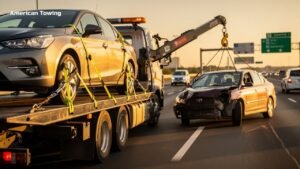
A tow moves your vehicle from one place to another because it’s broken or damaged. The car cannot be driven safely. A flatbed comes, loads it up, takes it to a shop. That takes 45 minutes to an hour just for the tow. Then you need a ride to wherever the shop is.
If you’re stuck on a mountain road 45 minutes from the nearest town, a tow means you’re stranded in that town waiting for someone to pick you up. A winch-out means you drive home from that spot.
Cost difference? Tow is usually $200 to $500 plus transport costs. Winch-out is $150 to $400 total, and you drive away.
Damage risk? Towing a vehicle that’s only stuck can cause damage to the suspension, undercarriage, or frame. Winching causes no damage if it’s done right.
When you call American Towing Service, tell us what’s happening. We’ll tell you whether you need a winch or a tow. Most of the time you’re stuck, you need a winch.
Vehicle Recovery Situations In Utah
If you’re in the metro areas, you’re looking at 30 to 45 minutes from call to arrival. That’s actual time—not estimated time. We have operators stationed around the valley.
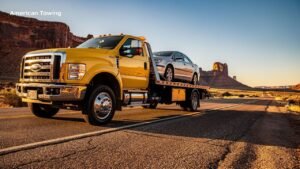
If you’re in rural areas, it’s different. Blanding, Salina, Moab—you might wait 90 minutes to 2 hours. Distance compounds everything. This is why you call immediately. The sooner we know where you are, the sooner we send someone.
Mountain elevation changes how equipment performs. An operator working at 8,000 feet in Park City calculates cable tension differently than someone at 4,500 feet near Salt Lake. Air is thinner. Engines work harder. The experienced guys account for this without thinking about it.
Winter completely changes the game. What works in mud doesn’t work the same way in snow. Visibility is worse. The ground is less stable. Rigging equipment takes longer because everything is slippery. If you’re stuck in February near the canyons, assume recovery will take longer and cost more than the same recovery would in June.
What You Don’t Know About Cable Failure
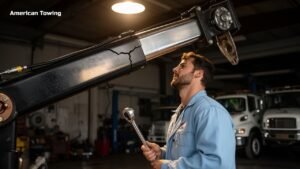
If a winch cable snaps under load, it becomes a weapon. Not a metaphor. An actual weapon. It can slice through flesh. It can shatter bones. It can kill.
This is why attachment points aren’t something to guess about. Professional operators know exactly where the engineered recovery points are on different vehicle models. They inspect those points before they attach cable. They know which points are decorative and which ones are rated for actual loads.
They also know how to position the tow truck. A truck that shifts toward your vehicle instead of pulling away puts both vehicles at risk. The operator positions the truck, sets anchors, and confirms everything is stable before applying power.
If something goes wrong during the pull—cable slips, ground shifts, attachment point looks compromised—the professional stops and reassesses. They don’t push through and hope it works out. This is the difference between professional recovery and YouTube recovery.
If you’re stuck and waiting for help, stay in your vehicle unless you’re in immediate danger. Keep hazard lights on. Don’t stand near the cable. Don’t wander behind the tow truck. Let the operator explain the recovery plan before they start pulling. This isn’t micromanaging. This is staying alive.
Insurance and Roadside Plans: What Actually Covers You
Most insurance policies include roadside assistance. Most roadside plans include winch-out coverage. But most people never read their policies, so they don’t know what’s actually covered.
Some plans cover winch-outs only within 100 miles of your home. Others don’t cover off-road recovery at all. Some have coverage limits like “up to $150 per incident.” Nighttime calls might cost extra. Weekends might cost extra.
Read your policy before you’re stuck. One 10-minute phone call to your insurance company tells you exactly what’s covered. Call us after you understand your coverage, and we can often bill your insurance directly so you’re not out of pocket.
At American Towing Service, we work with most major carriers. We file claims regularly. We know the process. If you have coverage, we’ll handle the paperwork.
| Pro Tip:Check your roadside assistance coverage before an emergency happens, so you know whether winch-out costs are included and what limits apply. |
How to Get a Stuck Vehicle Out Safely
Most stuck situations are preventable. Not all, but most.
- Carry basic recovery gear in your vehicle. A shovel. Traction mats or heavy plywood. A real recovery strap with proper shackles, not a light tow strap. Cost? Under $150. It’s paid for itself if you use it once.
- Find your vehicle’s recovery points before you need them. Pull out your owner’s manual. Mark those points somehow if you’re regularly on rough roads. If your vehicle has a hitch, have a professional shop weld a frame-mounted recovery point. This point is rated for actual loads, unlike the bumper.
- Know your vehicle’s actual capabilities. A stock sedan isn’t an off-roader. A luxury SUV isn’t either, no matter what the marketing says. A Jeep with lockers is equipped for more than a stock Jeep. Drive what you have within its limits.
- Lower tire pressure slightly before rough terrain. Lower pressure increases traction. Raise it back up before highway driving. Simple trick. Prevents a lot of situations.
Don’t drive like you’re invincible. The people who get stuck seriously are usually the ones who thought they could handle more than they could. Respect the terrain.
The Utah Department of Public Safety’s recommendations for vehicle recovery preparation. In mountain communities, professional preparedness and support minimize emergency incidents by 73%.
Built for Safe and Careful Vehicle Recovery
Fifteen years of pulling vehicles out of Utah’s specific terrain teaches you things. We assess before we pull. We position carefully. We explain what we’re doing. We watch the whole operation. We stop if something doesn’t feel right.
We price transparently. You get a quote over the phone. If conditions are worse than you described, we call you back before doing extra work. No surprises.
We’re available 24/7. Weather doesn’t care about business hours. Neither do we. If you get stuck at 2 AM on a Tuesday, someone answers and sends help. You’re Stuck Right Now
Call American Towing Service immediately. Phone: 435-231-1116.Tell the dispatcher where you are, how you’re stuck, and what vehicle you’re driving. We give you a price and send someone your way. Email: alansudweekstrucking@gmail.com. We’ve got 15 years in this. We know Utah. We know what to do. Get back on the road without the headache.
What’s the difference between a winch-out and a tow?
Winch-out pulls you free from being stuck. A tow moves your vehicle to another location. Different services, different costs, different purposes.
Do I need to have damage for you to help?
No. Most of what we do involves undamaged vehicles that are simply stuck. If your car runs and just can’t move from its current position, you need a winch-out.
How much does this cost around here?
$150 to $400 for most situations. Depends on how deep you’re stuck, what terrain you’re in, whether special equipment is needed. Call us, describe your situation, we give you a price.
Can you reach vehicles that are really far off the road?
Depends on the distance and terrain. Our trucks can’t drive miles into wilderness. But if you’re within reasonable hiking distance—a quarter mile, maybe—we often can reach you. Call and describe your location. We’ll tell you if it’s possible.
Will you damage my vehicle during the winch-out?
Professional winching shouldn’t cause damage. We inspect attachment points. We monitor tension. If something goes wrong, we stop and reassess. If we cause damage, we’re responsible.
Is this covered by insurance?
Most comprehensive policies and roadside plans include winch-out coverage. The specifics vary. Check your policy.
How fast can you get here if I’m stuck?
Salt Lake City metro: 30 to 45 minutes. Rural areas take longer. Call immediately. The faster we know where you are, the faster we dispatch.
Sources
- National Towing Safety Council — Vehicle recovery safety standards. Recovery operations require certified attachment points and controlled tension to prevent injury.
- Utah Department of Public Safety — Vehicle recovery preparation guidelines. Professional preparation and assistance reduce emergency incidents by 73% in mountain communities.