Summarize with
Roadside assistance services provide immediate intervention when a vehicle fails, significantly reducing the risks associated with being stranded on a busy highway. By providing expert mechanical support and traffic management, these services ensure that drivers and passengers remain protected from secondary collisions and environmental hazards. Professional help functions as a safety net during travel, offering specialized equipment and training to resolve mechanical issues quickly. This guide explores how these services operate to protect the motoring public. Years of field experience in towing and vehicle recovery provide the basis for the safety protocols and technical information shared here.
Hazards of Being Stranded on the Roadside
The shoulder of a highway is among the most dangerous places for a pedestrian or a stopped vehicle. High-speed traffic creates a constant risk of rear-end collisions or side-swipe accidents. According to data from the National Highway Traffic Safety Administration, secondary crashes often occur because drivers fail to see disabled vehicles in time to react. Environmental factors like extreme heat, freezing temperatures, or heavy rain can also turn a simple mechanical failure into a health emergency for occupants.
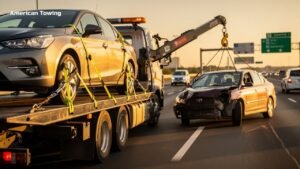
Roadside assistance services mitigate these dangers by reducing the time a vehicle spends on the shoulder. Professional responders use amber lighting and reflective gear to increase the visibility of the scene. This warning signals oncoming drivers to move over or slow down, creating a safer work zone. Without this equipment, a driver attempting a DIY fix is often nearly invisible to traffic, especially at night or in poor weather.
Effective Safety Protocols for Drivers
Knowing what to do during a roadside emergency is just as important as having a service provider to call. Safety begins the moment the vehicle shows signs of trouble. If possible, steer the car far away from the flow of traffic, aiming for the right shoulder or a parking lot. Once stopped, turn the wheels away from the traffic lanes. This ensures that if another vehicle hits the car, it will be pushed away from the road rather than into it.
Activate the hazard lights immediately. These flashing lights are the first signal to other drivers that a vehicle is stationary. If the situation allows, exit the vehicle through the passenger side door, away from traffic. Standing behind or in front of a disabled vehicle is dangerous. It is usually safer to stand behind a guardrail or on an embankment while waiting for emergency roadside assistance.
Critical Equipment and Professional Solutions
Professional responders bring tools and technology that the average driver does not carry. This specialized equipment allows for faster repairs and safer recovery of the vehicle.
|
Scenario |
Immediate Risk |
Professional Solution |
|
Flat Tire |
Exposure to moving traffic |
Rapid hydraulic lift and impact tools |
|
Dead Battery |
Loss of hazard lights |
Heavy-duty jump packs or battery testing |
|
Fuel Depletion |
Stranding in isolated areas |
Rapid fuel delivery and system priming |
|
Mechanical Failure |
Prolonged exposure on shoulder |
Professional towing to a secure location |
Bonus Tip: Drivers should keep a physical map or a printed list of emergency contacts in the glove box. Digital devices can lose power or signal in remote areas, making it difficult to request roadside emergency help.
Safety Benefits of Flat Tire Assistance
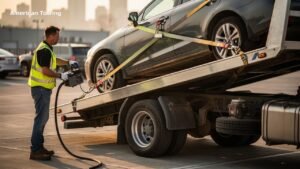
Changing a tire on a narrow shoulder is physically demanding and dangerous. Professional flat tire assistance removes this burden from the driver. Technicians use high-capacity jacks that are more stable than the screw-jacks included with most cars. These tools allow the technician to lift the vehicle and swap the tire in a fraction of the time it would take an untrained person.
Speed is a critical safety factor. The less time spent on the ground near the wheel well, the lower the risk of an accident. Professionals also check the condition of the spare tire and ensure the lug nuts are torqued to the correct specification. This prevents the wheel from coming loose later, which could cause another emergency.
Security Provided by Vehicle Lockout Assistance
Being locked out of a car is a safety issue, especially if it happens at night or in an unfamiliar neighborhood. Vehicle lockout assistance provides a secure way to regain access without damaging the car. Attempting to use coat hangers or other improvised tools can damage the door seals or power lock mechanisms.
A professional uses specialized wedges and reach tools to open the door quickly. This service prevents drivers from being left vulnerable outside their vehicles for long periods. It also ensures that the vehicle remains functional and secure once the door is opened.
Things to Consider Before Selecting a Service
When evaluating roadside assistance services, response time is often the most important factor. Every minute spent waiting is a minute of exposure to traffic. Look for providers that have a large fleet or a wide network of local partners.
- Coverage Area: Ensure the service operates in the regions where travel is most frequent.
- Equipment Types: Some vehicles, like those with all-wheel drive, require specific types of towing equipment, like flatbeds.
- Certifications: Technicians with recognized industry training often provide safer and more reliable service.
- Tracking Technology: Some providers offer digital tracking so drivers can see exactly where the help is and when it will arrive.
Managing Visibility in Low Light
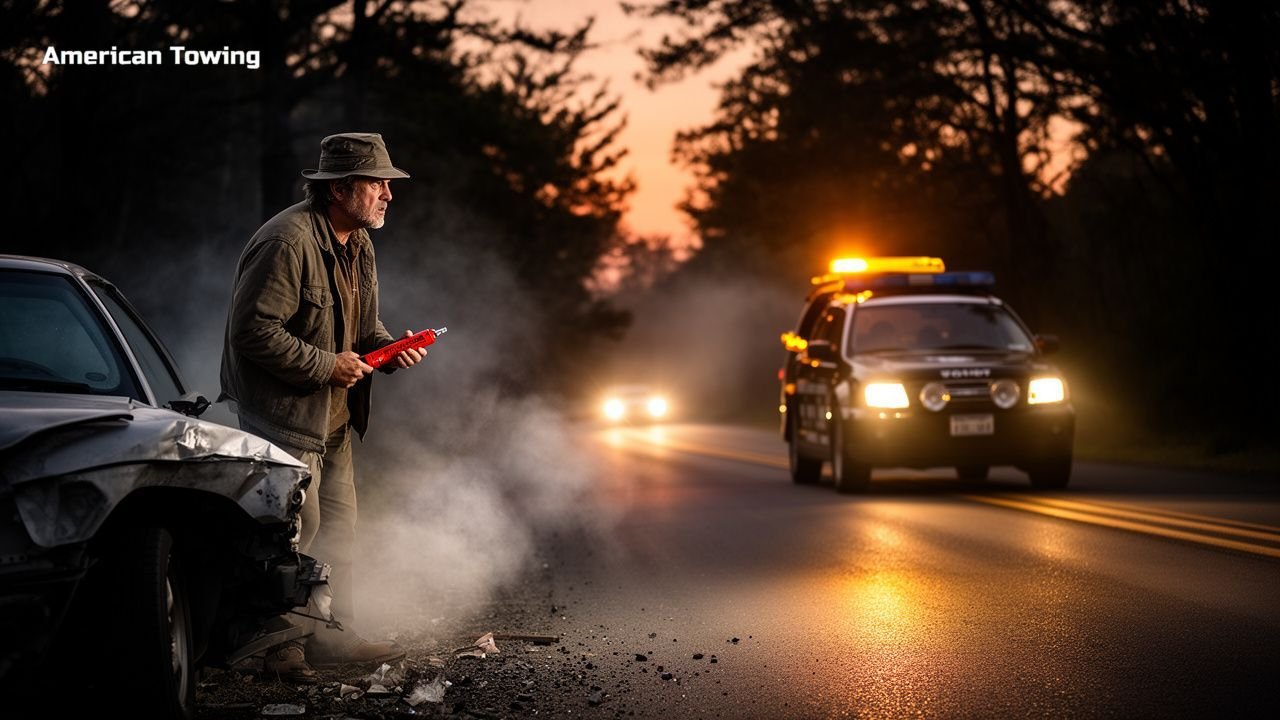
Visibility is the primary defense against being hit while stopped. Data published by the Insurance Institute for Highway Safety indicates that a high percentage of roadside fatalities occur during hours of darkness. Roadside assistance vehicles are equipped with strobe lights and reflective markings that far exceed the visibility of a standard car’s hazard lights.
Bonus Tip: Placing reflective triangles or flares at intervals behind the vehicle can give oncoming drivers more time to react. Start placing them about 10 feet behind the car and continue at 100-foot intervals if it is safe to do so.
Common Questions About Roadside Safety
What is the safest place to wait for help? The safest place is usually outside the vehicle, far back from the road, and behind a barrier like a guardrail. If there is no safe place to stand outside, stay buckled in the seat with the doors locked.
Can roadside services help on private property? Yes, most services can assist in driveways or parking garages. However, specialized equipment might be needed if the ceiling height is low in a parking structure.
Do weather conditions affect response times? Heavy snow or rain can slow down travel for everyone, including responders. During major storms, call volumes typically increase, so patience is necessary.
Is it safe to accept help from a passing stranger? While many people are well-intentioned, it is safer to wait for a uniformed professional in a marked vehicle. Professional responders have the training and insurance to handle the situation correctly.
Roadside Assistance FAQs
How long does a typical roadside service call take?
Most minor repairs, like tire changes or jump starts, take about 20 to 30 minutes once the technician arrives. The total time depends on the distance the technician must travel and the complexity of the mechanical issue.
Should the hazard lights stay on after the service vehicle arrives?
Yes, keeping hazard lights on provides extra visibility. The service vehicle will also use its flashing lights to create a larger visual warning for other motorists.
What information should be ready when calling for help?
Be prepared to give the exact location, the make and model of the vehicle, the license plate number, and a description of the problem. Providing a nearby landmark or a highway mile marker helps the technician find the car faster.
Are roadside services available 24 hours a day?
Many professional providers operate 24/7 because emergencies do not follow a schedule. Reliable companies maintain staff around the clock to ensure drivers are never left stranded overnight.
Can a roadside technician fix an engine failure?
Technicians can often diagnose the problem and provide minor fixes like replacing a belt or a hose. If the engine failure is major, the vehicle will usually need to be towed to a repair shop for more extensive work.
Final Thoughts on Roadside Safety
Roadside assistance services play a major role in highway safety by removing disabled vehicles and providing professional mechanical support. By prioritizing visibility and speed, these services reduce the likelihood of secondary accidents and protect drivers from environmental risks. Drivers should remain aware of their surroundings and follow established safety protocols while waiting for help. Evaluating service providers based on their equipment, response times, and expertise allows for better preparation before an emergency occurs. American Towing provides professional support based on these safety principles to keep local roads secure.
Contact American Towing for Support
Reliable help is essential when a vehicle fails unexpectedly. American Towing offers professional assistance for various roadside needs, including towing and recovery. For information or help, contact the office at 435-231-1116 or send an email to alansudweekstrucking@gmail.com to discuss specific vehicle needs or service areas.
Sources
- National Highway Traffic Safety Administration – Federal agency focused on transportation safety and accident prevention data.
- National Safety Council – Nonprofit organization providing research and advocacy for public safety and roadside hazards.
- AAA – National motor club providing extensive data on breakdown causes and roadside service trends.
- Insurance Institute for Highway Safety – Independent organization dedicated to reducing losses from motor vehicle crashes.