Skip to content
Summarize with
Your vehicle is stuck and you need help getting it out fast. American Towing Service provides expert winch out service throughout Circleville, UT and surrounding communities with 15+ years of recovering vehicles safely.
Imagine driving through Circleville after heavy rain when your tires suddenly lose traction by leaving your vehicle stuck in mud with no safe way to move forward.
Instead of risking damage by spinning the wheels harder, a professional winch-out service uses proper equipment and recovery techniques to pull your vehicle back onto stable ground safely.
Understanding What Is a Winch-Out Service
Winch-Out service uses specialized equipment to pull a stuck vehicle back to a safe spot. The operator controls the force carefully to avoid damaging the vehicle during recovery.
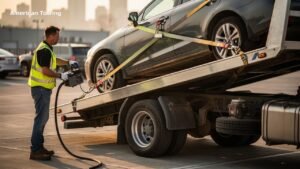
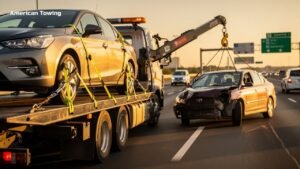
Professional winch-out service involves specialized trucks equipped with powered winches capable of pulling thousands of pounds. Your vehicle gets securely attached to cables and chains, then operators carefully extract it from ditches, muddy terrain, or deep ruts.
The process takes 15 to 45 minutes depending on how stuck your vehicle really is and accessibility to anchor points.
How Does a Winch-Out Service Work Step by Step
Professional winch out operators follow a careful process from start to finish. They secure the vehicle or choose the right equipment and use controlled force to recover it safely without unnecessary damage.
- Step One: Assessment. The towing crew arrives and evaluates your vehicle’s position, surrounding terrain, and structural integrity. They determine pulling angles and anchor point locations. This evaluation takes 5 to 10 minutes and determines the entire approach.
- Step Two: Safety Setup. Traffic control happens first if you’re on a roadway. Cones, warning lights, and personnel keep other vehicles clear. The tow truck positions at the safest angle preventing tip-over or additional vehicle damage during extraction.
- Step Three: Connection. Heavy chains or cables connect securely to frame rails or towing points on your vehicle. Operators never improvise attachment locations because improper connections rip off bumpers or damage suspension components. Proper attachment is everything.
- Step Four: Winching. Slow controlled power pulls your vehicle free. Operators watch for resistance and release immediately if something feels wrong. Jerking or rapid pulling damages vehicles and injures people. Steady pressure works every time.
- Step Five: Final Positioning. Once free, your vehicle gets positioned safely on the road with wheels spinning freely. Operators check for damage and confirm all systems work before releasing the vehicle.
The American Towing and Recovery Institute maintains industry standards for vehicle recovery procedures, operator certification requirements, and safety protocols that professional operators must follow.
Pro Tip: Always let trained operators handle winching because the right attachment point or pulling angle and steady pressure can prevent costly vehicle damage and safety risks.
When Do You Need a Winch-Out Service Exactly
You need a winch out service when your vehicle is stuck in mud or sand or snow and a ditch and cannot move safely.
Wet conditions after heavy rain cause vehicles to sink in mud or get high-centered on terrain. Snowstorms leave hundreds of cars immobilized in ditches. Attempting to drive around obstacles or through unmarked areas puts vehicles in positions they can’t escape.
Running off road onto private property during confusion leaves vehicles stranded without the ability to reverse or drive forward.
Sometimes vehicles get stuck because their owners made poor judgment. Sometimes it’s genuinely an accident. The reason doesn’t matter when you need recovery. What matters is getting professional help instead of letting someone yank your vehicle with a rope and hope for the best.
How Does Vehicle Recovery Work With Proper Technique
Vehicle recovery starts with assessing the situation and choosing the right recovery equipment. Professionals secure the vehicle and attach the winch properly or apply steady and controlled force to pull it onto stable ground.
They adjust the technique based on the vehicle’s position and terrain to reduce the risk of damage.
Modern vehicle recovery work uses weight distribution equations to determine the exact pulling forces needed. A lightweight sedan stuck in mud needs different force than a heavy pickup truck in a ditch. Using too much power snaps your vehicle’s frame or suspension. Using insufficient power leaves you stuck longer with additional recovery costs.
Environmental factors matter tremendously. Frozen ground requires different techniques than muddy terrain. Rocky surfaces demand different anchor points than sandy areas. Professional recovery operators understand soil mechanics and vehicle structural engineering because their decisions affect your vehicle’s integrity.
How to Recover a Stuck Vehicle Without Professional Help
You can recover a lightly stuck vehicle by clearing obstacles or adding traction and gently rocking it forward and backward.
If it remains stuck or sits in an unsafe position then professional recovery equipment can help prevent vehicle damage.
- Never use another vehicle to pull yours out because both get damaged when something goes wrong. Human error causes chain failures that whip around causing injuries. Improper attachment locations tear frames. Overcommitting suspension systems breaks expensive components.
- If you must attempt recovery yourself in an emergency, use these principles. Only pull straight back in the direction your vehicle became stuck. Pull slowly with absolutely zero jerking or accelerating.
- Keep people clear of cables and chains in case they snap. Stop immediately if you feel resistance or hear unusual sounds. Most importantly, call professionals if your first gentle attempts don’t work immediately.
Pro Tip: If your vehicle does not move with a gentle attempt then stop rather than adding more force. Professional recovery can prevent injuries and costly vehicle damage.
Understanding What Vehicle Winching Is and How It Differs
It describes the mechanical process, while winch-out service encompasses the entire professional recovery experience including assessment or safety and expertise. Winching alone isn’t recovery unless executed properly by trained professionals.
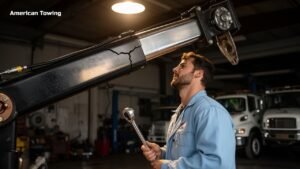
Modern winches operate through hydraulic power systems creating pulling force without burning out electrical systems. Cable capacity varies from 5,000 pounds on light trucks to 20,000 pounds on heavy recovery vehicles.
Operators understand load ratings and safety factors preventing catastrophic equipment failures during recovery operations.
The difference between dangerous and safe recovery comes down to professional knowledge. Proper angle analysis, secure attachment, controlled power application, and environmental awareness separate professional recovery from backyard experiments that damage vehicles.
How Long Does Vehicle Recovery Take in Real Situations
Vehicle recovery usually takes 30 minutes to a few hours which depends on the vehicle position or terrain and weather as well as equipment required. More difficult recoveries may take longer if special equipment or additional assistance is needed.
Complex situations add time significantly. Vehicles in trees or on steep slopes require additional equipment and careful planning. Winter weather slows operations when snow removal precedes actual recovery. Multiple vehicles stuck together require careful extraction sequencing preventing additional damage.
Weather impacts timeline. Rain delays operations because slippery conditions make positioning dangerous. Darkness requires additional lighting setup.
Traffic management takes longer on busy highways than quiet rural roads. Expect 30 to 60 minutes for most scenarios and 60+ minutes for complex situations.
| Recovery Scenario | Typical Time | Complexity Level | Equipment Needed |
|---|---|---|---|
| Vehicle in shallow ditch | 20-30 minutes | Low | Standard tow truck |
| Vehicle stuck in mud | 25-40 minutes | Medium | Winch equipped truck |
| Vehicle on steep slope | 45-90 minutes | High | Heavy rotator truck |
| Multiple vehicles | 60-120 minutes | High | Multiple units |
| Vehicle in water | 90-180 minutes | Critical | Specialized equipment |
| Winter recovery | 30-60 minutes | High | Heated equipment |
Professional Recovery in Circleville Utah Weather Conditions
Winter snow and ice create stranded vehicle situations monthly. Summer flash flooding in canyons traps vehicles quickly. Spring muddy conditions from snowmelt cause unexpected stuck vehicle calls. Circleville and surrounding communities experience distinct seasonal recovery challenges.
According to the National Highway Traffic Safety Administration, vehicle recovery operations account for 23% of roadside emergency calls annually. They provide official statistics on roadside emergencies and recovery service demand.
Professional operators in mountain communities understand local terrain and seasonal patterns preventing additional damage during extractions.
Our team at American Towing Service handles Circleville’s unique weather challenges because we work here constantly. We know which roads flood in heavy rain.
We understand seasonal mud patterns. We position equipment strategically for the fastest response times when your vehicle gets stuck.
Frequently Asked Questions
Is winch-out service covered by roadside assistance?
Most roadside assistance plans cover basic towing and winching services up to certain limits. Your coverage depends on plan details and service limitations. Verify coverage with your insurance agent before assuming you’re protected.
What’s the difference between winching and regular towing?
Winching extracts vehicles from difficult positions using mechanical force. Regular towing moves functional vehicles from point A to point B. Your stuck vehicle likely needs winching, not towing.
Can I damage my vehicle during recovery?
Improper recovery damages vehicles permanently. Professional operators prevent damage through proper technique. DIY recovery or inexperienced operators cause frame damage and mechanical problems costing thousands.
How much does professional winch-out service cost?
Service costs range from $250 to $1,000 depending on difficulty, location accessibility, and recovery time. Straightforward extractions cost less. Complex situations with equipment positioning and extended operations cost more.
Should I wait for your specific towing company?
Call immediately when stuck rather than waiting for specific operators. Professional service providers respond quickly to emergencies. Quality matters more than brand loyalty when your vehicle needs extraction.
Are winch-out services available 24/7 in Circleville?
Yes, American Towing Service provides round-the-clock recovery in Circleville and surrounding communities. Day or night, we respond to your emergency because vehicles get stuck on no schedule.
How quickly can American Towing Service arrive in Circleville?
Our average response time in Circleville proper is 20 to 25 minutes. Surrounding communities typically see 30 to 40 minute arrival times. We position equipment strategically for the fastest emergency response.
Does Circleville Utah weather make recovery more expensive?
Winter conditions and muddy seasons increase recovery complexity sometimes requiring additional equipment or extended operational time. Seasonal pricing adjustments occur but emergency needs aren’t delayed for cost considerations.
Ready for professional vehicle recovery?
We at American Towing Service provide expert winch-out service throughout Circleville, UT and nearby communities with 15+ years of real experience handling complex recoveries safely.
Call us at 435-231-1116 or email alansudweekstrucking@gmail.com for immediate assistance today.
Sources
National Highway Traffic Safety Administration: This official government source provides comprehensive statistics on vehicle recovery operations, emergency roadside assistance demand, and safety protocols that professional towing operators follow nationwide.
American Towing and Recovery. Establishes technical standards for safe vehicle recovery equipment or winch capacity ratings and operator certifications ensuring professional grade equipment meets safety requirements.