Skip to content
Summarize with
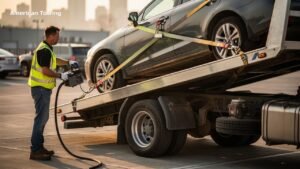
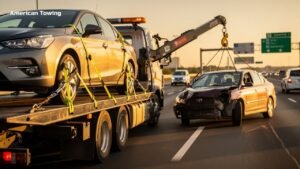
Roadside assistance provides immediate support to motorists who experience vehicle malfunctions or accidents while traveling. This service typically involves dispatching a professional to handle on-site repairs such as jump-starting a dead battery, changing a flat tire, or delivering fuel to a stranded car. When a vehicle cannot be repaired where it sits, the service includes towing the car to a safe location or a chosen repair facility.
Drivers rely on these services to manage the stress and physical hazards of being stuck on a busy highway or in a remote area. This guide draws from extensive field experience in vehicle recovery and logistics to help motorists understand their options and prepare for unexpected mechanical issues. American Towing offers this information to ensure every driver has the knowledge needed to handle a breakdown safely and efficiently.
Primary Emergency Roadside Assistance Services
Standard programs offer a variety of specific services ranging from simple mechanical fixes to vehicle winching, designed to address the most frequent causes of vehicle disability. Understanding these features allows drivers to choose the right level of coverage for their specific needs.
Flat Tire Assistance
Flat tires remain one of the most frequent reasons for service calls. Most providers offer on-site help to remove the damaged tire and install the vehicle’s spare. If a spare is not available or is also flat, the provider will tow the vehicle to a tire shop.
Bonus Tip: Drivers should check the air pressure in their spare tire every six months. A flat spare tire is a common issue that complicates roadside recovery.
Dead Battery Jump Start
Cold weather or leaving lights on can drain a battery quickly. Service professionals use portable jump packs or heavy-duty cables to restore power. A report from AAA Newsroom shows that battery failures are a leading cause of service requests, particularly during seasonal temperature extremes.
Fuel Delivery Support
To address the common issue of running out of gas, most assistance plans provide a small fuel delivery, usually two to three gallons, to help a driver reach the nearest station. While the delivery service is often covered, drivers may need to pay for the actual fuel provided.
Lockout Services
Locking keys inside a car is a frustrating but common mistake. Professionals use specialized tools to open car doors without damaging the window seals or locking mechanisms. According to data from the Insurance Information Institute, many insurance policies offer lockout coverage as an optional add-on.
Common Roadside Emergencies and Statistical Trends
Vehicle breakdowns are more common than many drivers realize. Each year, millions of motorists find themselves waiting for help on the shoulder of a road. Data regarding these incidents helps identify the areas where drivers are most vulnerable.
| Service Category | Typical Solution | Estimated Time on Site |
| Mechanical Towing | Vehicle transport to a garage | 45 to 90 minutes |
| Battery Jump Start | Electrical boost to start the engine | 10 to 15 minutes |
| Tire Replacement | Swapping the flat with a spare | 15 to 25 minutes |
| Winching | Pulling a vehicle out of mud or snow | 30 to 60 minutes |
As noted by Consumer Reports, the rise of complex electronics in modern cars has changed the nature of roadside calls. While older cars often suffered from simple mechanical failures, newer vehicles frequently face electronic control module issues or battery drain from high-tech features. Recognizing these patterns is the first step toward effective preparation; however, immediate safety remains the priority when an incident occurs.
Roadside Safety Tips for Immediate Action
Safety is the highest priority when a vehicle fails. The moments immediately following a breakdown are the most dangerous for the driver and passengers.
- Move the vehicle: If possible, steer the car to the right shoulder of the road. Get as far away from moving traffic as the terrain allows.
- Increase visibility: Turn on the hazard lights immediately. If it is dark, keep the interior lights on so other drivers can see the vehicle.
- Use safety markers: Place flares or reflective triangles behind the vehicle. Experts suggest placing the first marker 10 feet behind the car and another 100 feet further back on high-speed roads.
- Stay inside if necessary: If the car is on a busy highway with a narrow shoulder, it is often safer to stay inside the vehicle with seatbelts fastened until help arrives.
- Communicate location: Use a smartphone to find exact GPS coordinates or look for highway mile markers to help the dispatcher find the vehicle quickly.
Bonus Tip: Carry a physical map in the glovebox. GPS systems can fail in areas with poor cellular reception, and knowing the nearest cross street or landmark helps rescue teams locate the car.
Technical Details of Battery and Tire Support
When a professional arrives, the process follows a specific set of steps to ensure the vehicle returns to the road without further damage.
For a battery jump start, the technician first inspects the terminals for corrosion. Built-up acid can prevent a clean connection. Once cleaned, the cables are attached in a specific order, positive to positive and negative to a grounded metal part of the engine block. This prevents sparks near the battery, which can be hazardous.
For tire changes, the technician uses a hydraulic jack to lift the car safely. The National Highway Traffic Safety Administration (NHTSA) emphasizes that drivers should never attempt to change a tire on a soft or uneven surface, as the jack could slip. Professional responders carry wide-base jacks and wheel chocks to prevent the vehicle from rolling during the process.
Things to Consider Before Making a Decision
Choosing a roadside assistance plan requires looking at several factors beyond just the monthly price. Not all plans are created equal, and some may have limitations that leave drivers stranded.
- Towing Distance: Some basic plans only cover towing for three to five miles. If the driver lives in a rural area, this limit is often insufficient.
- Service Frequency: Many plans limit the number of service calls allowed per year. Four calls per year is a common standard.
- Vehicle Limitations: Check if the plan covers motorcycles, trailers, or recreational vehicles. Many standard plans only apply to four-wheel passenger cars.
- Response Time Guarantees: While no company can guarantee a specific arrival time in every situation, look for providers with a large network of service vehicles in the local area.
- Driver vs. Vehicle Coverage: Some plans follow the driver regardless of what car they are in, while others are tied strictly to a specific vehicle identification number.
Common Questions About Emergency Services
Does roadside assistance cover the cost of parts?
Generally, no. The service covers the labor to get the car started or the cost to transport it. If a car needs a new battery or a new tire, the driver is responsible for the cost of those items.
Can help be requested for a car stuck in a driveway?
Yes, most providers offer “home start” services. If a car will not start in a residential driveway, a technician can be dispatched to jump-start the battery or tow it to a shop.
What happens if the car is stuck in mud or snow?
This requires winching or extraction services. Drivers should check if their plan includes winching. This service involves using a motorized cable to pull the car back onto a drivable surface.
Is help available for electric vehicles?
Electric vehicles (EVs) present unique challenges. If an EV runs out of power, it usually requires a flatbed tow to a charging station because many EVs cannot be towed with their wheels on the ground without damaging the motors.
Key Takeaways for Motorists
Preparation is the best defense against roadside emergencies. Drivers should regularly inspect their tires, keep their batteries in good condition, and maintain an active assistance plan. When a failure occurs, staying calm and prioritizing safety by moving off the road and signaling for help are the most effective actions. American Towing recommends reviewing coverage limits annually to ensure they match current driving habits and vehicle types. Always evaluate the specific needs of a commute or road trip before heading out.
Emergency Assistance Contact Information
American Towing provides reliable support for drivers facing mechanical issues or accidents. For immediate help or to learn more about available services, contact the team at 435-231-1116. Questions regarding specific recovery needs can also be sent via email to alansudweekstrucking@gmail.com. Maintaining access to professional support ensures that a minor mechanical problem does not turn into a dangerous situation.
Sources
- AAA Newsroom – Detailed reports on summer travel trends and the most common causes of vehicle breakdowns.
- National Highway Traffic Safety Administration (NHTSA) – Official government safety guidelines for vehicle maintenance and roadside emergency protocols.
- Insurance Information Institute – An educational resource explaining how different types of insurance and roadside coverages function.
- Consumer Reports – Comparative analysis of various roadside assistance providers and service quality benchmarks.
- MarketWatch – Financial analysis of the costs and benefits associated with different emergency vehicle service plans.