Summarize with
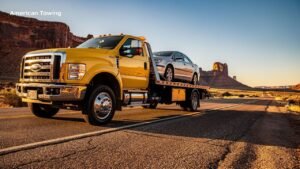
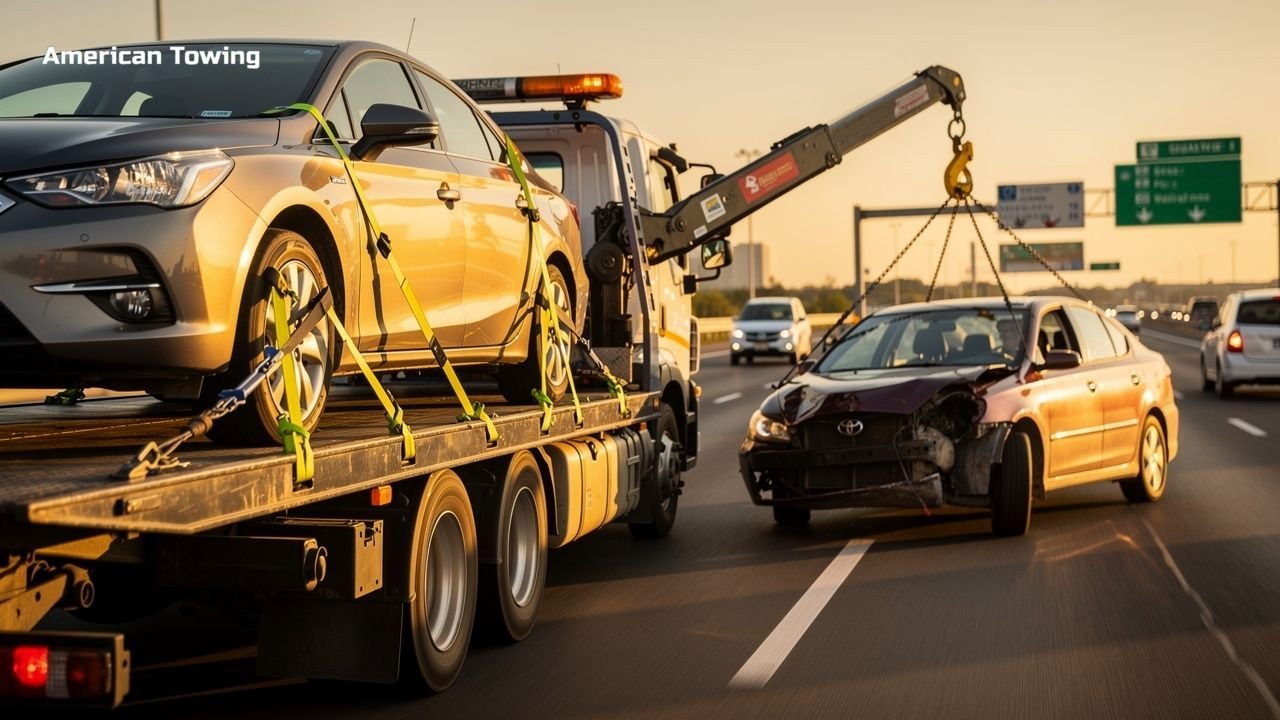
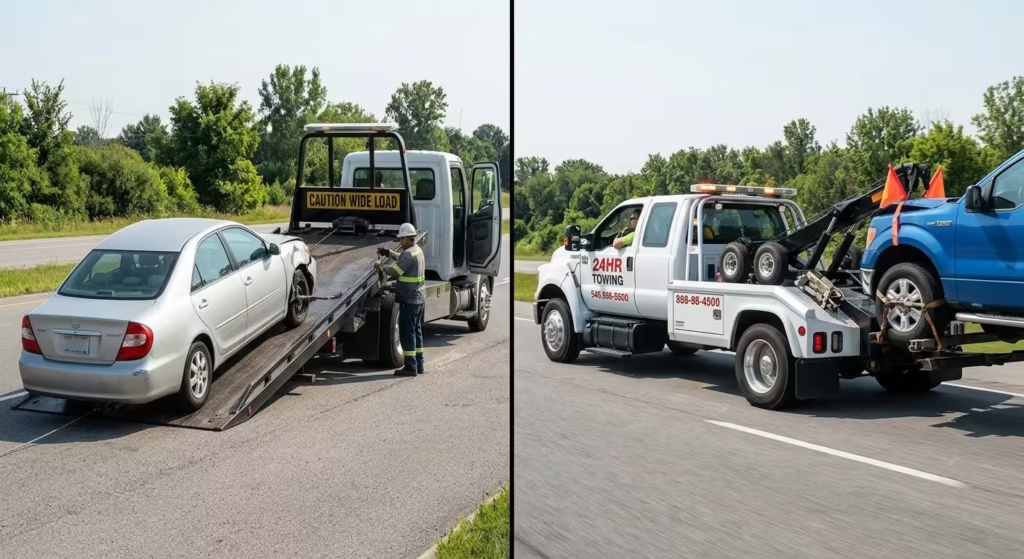
A flatbed tow lifts your entire vehicle off the ground onto a flat trailer bed. A traditional tow is usually done with a wheel lift that keeps two of your wheels on the pavement and pulls the vehicle behind the truck. That one detail, whether your tires touch the road, decides almost everything else about cost, risk, and which vehicles can even be towed that way.
Georgia’s Attorney General consumer protection office notes that a towing company can be held liable for damage caused during the tow itself, which is exactly the kind of risk a flatbed is built to avoid since nothing drags or scrapes along the road. If you have ever wondered about the difference between flatbed and towing, this is the variable to understand before you worry about anything else.
Why Your Vehicle’s Condition Determines The Towing Method
The rotation of the wheels is what decides everything else.
On a flatbed, the car doesn’t move at all, it rides like cargo. On a wheel lift, one axle stays on the ground and spins freely the whole trip. That’s fine for a basic front wheel drive car in neutral, but risky for All Wheel Drive vehicles, since the drivetrain isn’t built to have one axle turning while the engine’s off.
NHTSA’s service bulletin library backs this up: a Nissan bulletin warns that dolly or flatbed towing service an AWD automatic can cause serious transmission or drivetrain damage, and a flatbed is the only way to avoid that risk entirely.
How Does Flatbed Towing Work?
The process is straightforward, and it is the reason flatbed towing benefits extend beyond just convenience.
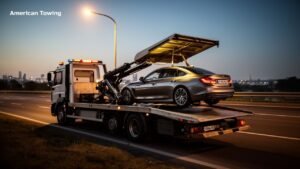
- The bed tilts down. A hydraulic system lowers the back of the trailer to a ramp angle.
- The vehicle loads on. If it still runs, it is driven up slowly. If it does not, a winch pulls it up on a cable.
- The bed levels out. Once the car is fully on, hydraulics bring the platform flat.
- Straps and chains secure it. Four tie down points, minimum, wrapped around the wheels rather than the frame, so there is no stress on the suspension.
- The whole vehicle rides above the road, not on it, for the entire trip.
That last step is the point. No tire contact means no wear, no rotating drivetrain, and no risk of the vehicle dragging or fishtailing behind the truck.
What Is Traditional or Wheel Lift Towing?
Towing, also known as “wheel lift” or “dolly” towing is the traditional method of lifting one end of your vehicle with a hydraulic yoke that is slid under the tires on one axle, thereby raising a portion of your vehicle a few feet off the ground. The other axle stays on the pavement and rolls along behind the truck, which can lead to wheel lift towing problems in certain vehicles or towing situations.
Hooking up takes two or three minutes, compared with six or seven for a flatbed, and requires less space on a narrow street or in a full parking garage. That speed is exactly why flatbed towing vs traditional towing is not really a question of which is better. It is a question of which fits the vehicle and the situation in front of you.
Flatbed vs. Wheel Lift Towing
| Factor | Flatbed Towing | Traditional Wheel Lift Towing |
|---|---|---|
| How the vehicle rides | Fully off the ground, zero rotation | One axle on the ground, wheels spin |
| Best for | All wheel drive, Four Wheel Drive, low clearance, luxury, exotic, accident damaged | Standard front or rear wheel drive vehicles |
| Setup time | Roughly 5 to 8 minutes | Roughly 2 to 4 minutes |
| Space needed | More, needs a straight approach for the ramp | Less, works in tighter spots |
| Drivetrain risk | None | Real risk on AWD or 4WD without disengagement |
| Road debris and tire wear | None during transport | Some, tires still touch the road |
| Typical cost | Higher, due to the equipment | Lower, for a simple short tow |
When Is Flatbed Towing Needed?
Not every call needs one. When is flatbed towing needed comes down to a short list of situations where the wheel lift option is either unsafe or simply not allowed:
- The vehicle has all wheel drive or four wheel drive and cannot be shifted into a neutral towing mode
- The car has been in a collision and the wheels do not turn freely or the alignment is off
- Ground clearance is low enough that a wheel lift cradle risks scraping the bumper or splitting a lip spoiler
- The vehicle is a motorcycle, classic car, or anything the owner does not want touching the road at all
- The tow is a long distance, where hours of one axle rolling adds real mileage and wear
Outside of those, a wheel lift tow does the job for less money and less time on scene.
How to Choose Between Flatbed and Wheel Lift Towing
- Dead battery on a front wheel drive sedan, short distance to a shop. Wheel lift is fine.
- All wheel drive SUV that will not start. Flatbed, no exceptions, to protect the transfer case.
- Car totaled in a crash with a bent wheel. Flatbed, because a damaged wheel cannot safely roll behind a truck.
- Motorcycle or a car with an aftermarket lip kit. Flatbed, to keep it off the pavement entirely.
When You Don’t Need a Tow Truck
A tow truck isn’t always necessary. A dead battery usually just needs a five minute jump with cables or a portable jump pack.
Call for a tow only if the engine still won’t start after a proper jump, or the car can’t be driven safely, like a flat on a spare that’s already worn out. That’s when the difference between flatbed and towing actually matters. A company that tells you to try the cheap fix first is one worth trusting with the calls that do need equipment.
Move Over Laws for Tow Truck Drivers
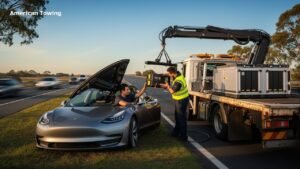
Whichever truck shows up, the driver is going to be standing in a traffic lane at some point, either loading the vehicle or working the winch. Utah’s Move Over Law (Utah Code 41-6a-904) mandates that drivers move over a full lane of traffic when it is safe to do so to stop by a stationary tow truck with its lights on, or slow down if it’s not safe.
According to the Utah Department of Public Safety, a national survey conducted by the NHTSA revealed 71 percent of drivers were unaware that the Move Over laws apply to tow trucks, in addition to police and ambulances. As you cross the highway, it’s important to know before you pass on.
Frequently Asked Questions
Is flatbed towing more expensive than traditional towing?
Usually, yes. The truck costs more to run and hookup takes longer, so the rate reflects that. A wheel lift tow is cheaper for a standard car that doesn’t need a flatbed.
Can any vehicle go on a flatbed truck?
Almost any car, truck, or SUV fits. Oversized or extra wide vehicles may need a specialty carrier.
How long does a flatbed tow take compared to a wheel lift tow?
Hookup runs five to eight minutes on a flatbed versus two to four for wheel lift. Travel time on the road is about the same either way.
Does Utah’s Move Over Law apply to tow trucks?
Yes. Utah Code 41-6a-904 requires drivers to move over a lane or slow down for a stopped tow truck with lights on, same as for police or fire vehicles.
Why does winter weather make flatbed towing more common in Utah?
Ice and snow raise the odds of a vehicle sliding off the road with wheel or suspension damage, which needs a flatbed regardless of drivetrain. Higher elevation routes see this more than valley roads.
Call Before You Guess
You do not need to know which truck to ask for. Tell American Towing Service what you are driving and what happened, and dispatch will send the right one. Call 435-231-1116 and email alansudweekstrucking@gmail.com any time, day or night.
Sources
- National Highway Traffic Safety Administration, manufacturer technical service bulletin on all wheel drive towing limitations: — supports the drivetrain damage risk described for wheel lift towing on AWD vehicles.
- Utah Department of Public Safety, Utah Highway Patrol, Move Over Law page: — supports the Utah Code citation and the NHTSA awareness statistic.