Summarize with
Not all tow trucks are the same and it can be more than an afternoon mistake. If you’ve ever watched a truck lift a car’s front end and drag the rear wheels down the highway, you’ve seen wheel lift towing in action.
A flatbed towing service does something different: it loads the entire vehicle onto a flat, level bed so none of the wheels touch the road at all. American Towing Service gets calls almost daily from drivers who assumed any tow truck would do, only to learn their vehicle needed a flatbed towing service the whole time. According to guidance published by the Federal Motor Carrier Safety Administration, tow operations are subject to federal safety and equipment standards, which is part of why the type of truck dispatched to your breakdown actually matters more than people assume.
This guide breaks down exactly what a flatbed towing service involves, which vehicles genuinely require one, and how to tell the difference between a situation where it’s optional and one where it’s the only safe option.
What Is Flatbed Towing?
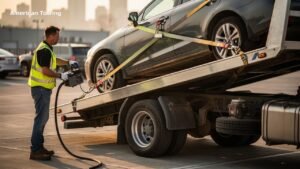
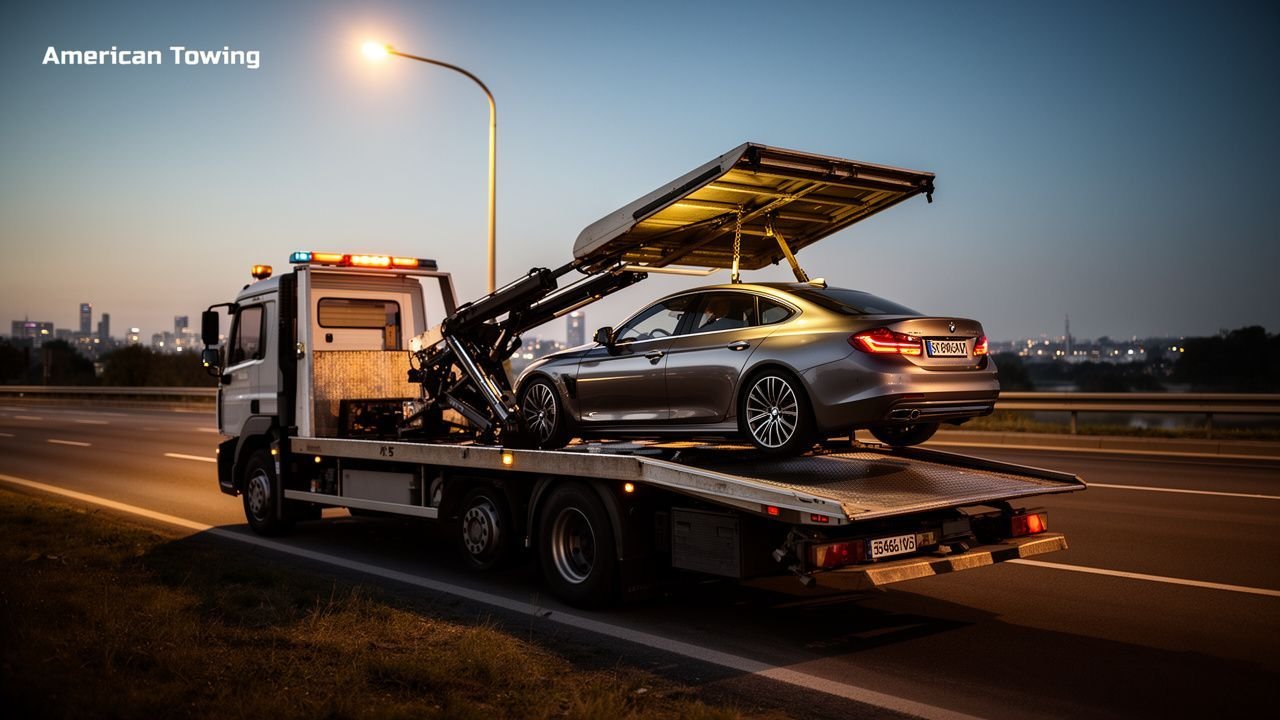
A flatbed tow truck, also known as a rollback tow, is a tow truck that has a hydraulic bed that tilts down to the ground. The car is usually driven, winched or rolled onto the bed, then the bed is leveled off and the car drives the entire distance with no wheel spinning.
That’s in contrast to wheel lift, which supports two wheels while lifting and towing the other two. The key to a good response to what is flatbed towing is total wheel contact with the road versus none.
That distinction sounds small until you consider what constant wheel rotation does to a transmission or transfer case that was never designed to spin without the engine running and the oil pump circulating lubricant through it.
A flatbed towing service essentially removes the vehicle from the equation entirely. Nothing rolls, nothing drags, and nothing spins that shouldn’t be spinning. For a driver standing on the shoulder trying to decide what to request, that’s really the whole concept in one sentence.
How a Flatbed Tow Truck Works
When the truck reaches the site, the bed is angled down, the load is strapped securely and/or wheel nets rated for the load are used to secure the truck, and they are lifted back to a horizontal position before the truck is driven away. When the truck arrives at the site, the bed is tilted down, the load is strapped securely and/or wheel nets rated for the load are used to secure the truck and lifted to a horizontal position before departure.
Tow trucks come in a variety of sizes, most of the standard flatbeds are in the middle ranges and the larger trucks and commercial equipment towing trucks are at the top end of the gross vehicle weight rating scale.
A well maintained flatbed towing service truck can usually load a passenger car in under ten minutes once it’s on scene, which matters quite a bit when you’re standing on the shoulder in the rain waiting for help to show up.
When Is Flatbed Towing Needed?
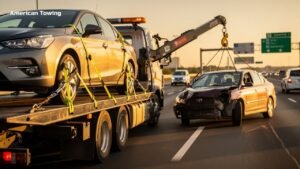
The short answer is anytime rolling the wheels on the ground could cause damage, or anytime the vehicle physically can’t roll at all. When is flatbed towing needed comes up constantly with accident recovery, since a car with a bent axle or a blown tire often can’t be towed any other way without dragging metal on asphalt for miles.
It also comes up with vehicles that simply won’t start or won’t shift into neutral, since wheel lift towing generally requires the transmission to be in neutral for the free wheels to roll safely without internal damage.
A flatbed towing service call is also the right move any time a vehicle has been sitting for an extended period, since a seized brake caliper or a flat spotted tire can turn a routine wheel lift tow into a much bigger headache than it needed to be.
Situations That Call for a Flatbed
Beyond mechanical failure, there are a handful of predictable scenarios where a flatbed is simply the smarter call. Long distance moves are one, since a flatbed protects the vehicle over hundreds of miles in a way wheel lift towing simply can’t match. Severe weather is another.
If there is ice, deep snow or flooded roads, the best choice is a fully loaded flatbed as the car will not come in contact with the unstable surface during the tow. A flatbed towing service is also routine when police or highway crews have to get the vehicle off the accident scene rapidly since it is easier and safer to load all of the vehicle at once compared to a partial lift on a damaged frame.
Vehicles That Need Flatbed Towing
Some vehicles aren’t just better off on a flatbed, they genuinely shouldn’t be towed any other way, full stop. Understanding which category your car falls into can save you a repair bill that costs more than the tow itself would have.
All Wheel Drive and Four Wheel Drive Cars
This is the big one. Vehicles that need flatbed towing most often include AWD and 4WD models, because all four wheels stay mechanically connected through a center differential or transfer case.
Federal service bulletins filed with NHTSA, including one covering Nissan’s full AWD and CVT lineup, explicitly warn against towing these vehicles with any wheels on the ground, since the unlubricated internal components can overheat and fail in less than a mile of travel.
Subaru’s Symmetrical AWD, Audi’s Quattro, and Mercedes’ 4MATIC systems all carry the same warning in their owner’s manuals, without exception. Calling a flatbed towing service for one of these cars isn’t being overly cautious, it’s following the manufacturer’s own written instructions.
Repair estimates for drivetrain damage caused by improper towing regularly run into several thousand dollars, largely because a transfer case or center differential failure often means replacing multiple internal components rather than a single part.
A flatbed towing service avoids that risk entirely, and the cost difference between calling one and calling a standard tow truck is rarely more than a small fraction of what a repair would run.
Low Clearance and Luxury Vehicles
When it comes to the tow, low-riding cars and anything with little ground clearance risk bumper, splitter or exhaust contact during a standard wheel lift tow.
A flatbed will never require the car to be angled, tilted or dragged over a curb or ramp at any point. Owners of modified or high value vehicles often request a flatbed towing service by name for exactly this reason, even when the vehicle is otherwise driveable.
Motorcycles and Specialty Vehicles
Motorcycles, classic cars, and anything without a conventional four wheel chassis generally need a flatbed by default.
There’s no safe way to wheel lift a motorcycle, since it has no frame to secure a lift arm against, and most classic car owners won’t risk the frame stress that comes with any other towing method.
Flatbed Towing Benefits
The advantages go beyond just avoiding drivetrain damage, though that’s the headline reason most people end up needing one in the first place.
Protection for Your Drivetrain and Tires
Zero wheel contact means zero wear on tires, brakes, and suspension components during transport. That math alone explains most of the flatbed towing benefits drivers care about once they understand what’s actually at stake mechanically. Stability is the other major piece.
A securely strapped vehicle riding on a flat, level deck doesn’t shift or bounce the way a partially lifted car can on rough roads, which matters a great deal if you’re transporting anything already damaged from an accident or already leaking fluid.
A flatbed towing service also tends to be faster overall for accident recovery, since there’s no need to assess which wheels are safe to leave on the ground before loading. The vehicle simply goes on the bed as is, whatever condition it’s in.
Flatbed Towing vs Traditional Towing
Both approaches have their merits but are not always necessarily the best for the job depending on the circumstances and the vehicle. The bottom line of flatbed towing vs traditional towing is based on vehicle type, distance and access.
Unlike full size flatbeds, wheel lift trucks are smaller, more agile and quicker to dispatch in tight urban areas such as parking garages or narrow side streets where a full size flatbed can’t easily fit, maneuver or turn around.
| Factor | Flatbed towing | Wheel lift towing |
|---|---|---|
| Wheel contact with road | None | Two wheels remain down |
| Best suited for | AWD, 4WD, damaged, low clearance vehicles | Standard 2WD vehicles, short distance |
| Maneuverability | Requires more space | Better in tight urban areas |
| Typical distance | Short and long distance both | Best for shorter local tows |
| Setup time | Slightly longer | Usually faster on scene |
Why Wheel Lift Towing Still Has a Place
For a standard front wheel drive sedan in good mechanical condition, a short distance wheel lift tow is often perfectly safe and considerably quicker to arrange. The key is knowing which wheels are being lifted.
A front wheel drive car needs its front wheels raised so the transmission isn’t forced to spin against a stationary engine, and getting that detail wrong is where most towing damage complaints actually originate.
When to Use a Flatbed Tow Truck
If you’re unsure which to request, default to a flatbed rather than guessing. When to use a flatbed tow truck is rarely a close call once you know your vehicle’s drivetrain: AWD, 4WD, low clearance, non running, or accident damaged vehicles should all go on a flatbed without exception.
American Towing Service can usually tell within a minute or two of hearing your vehicle’s year, make, and condition whether a flatbed towing service is required outright or simply the safer and smarter choice for peace of mind.
Mistakes to Avoid When Requesting a Tow
The most common mistake is not mentioning the drivetrain when you call for help. Dispatchers can’t see your car, so if you don’t say all wheel drive or four wheel drive, you may get a truck that isn’t equipped for the job, and then you’re waiting again for the right one to arrive.
Requesting a flatbed towing service upfront, even when you’re not entirely sure it’s required, saves everyone time compared to a second dispatch later.
The second mistake is assuming price should be the only factor when choosing a reliable towing service. A cheaper wheel lift tow on a vehicle that actually needed a flatbed can turn into a repair bill many times larger than whatever you saved on the tow itself.
The third error, although less frequently made, is failing to ask if the truck they’re hauling to the spot is a flatbed towing service versus a standard wrecker because not all towing companies have the same vehicles on standby for every call.
FAQs
What is the price of a flatbed tow?
The costs of pricing vary greatly by distance and vehicle size, but most tows that are local are priced in the range of $75 to $200, with long distance tows being priced per mile after that base cost. The quote received before dispatch ensures no unpleasant surprises when the truck arrives.
What to do if waiting for a towing company?
If on a highway shoulder, stay in the vehicle and wear your seatbelt, turn on your flashing lights and move to a place that is safe from traffic as soon as possible. Don’t take your phone off battery so the operator can contact you if they need to give you a new time of arrival.
What is the maximum length of a vehicle that can be carried by a flatbed truck?
There’s no real upper limit. Flatbeds regularly handle both short local moves and cross country transports, since the vehicle rides completely off the road for the entire trip regardless of how far it’s going.
How Long Does Roadside Assistance Usually Take to Arrive?
Response times vary based on location and time of day but most calls within a service area will see a truck arrive within thirty to forty five minutes. Rush hour and bad weather can push that closer to an hour, so it helps to ask for an estimated window when you call.
What Should I Check Before Choosing a Towing Company?
Make sure to ask about licensing, insurance and clear pricing before you agree to a tow. A company willing to give you a straight answer upfront about cost and arrival time is usually a good sign of how the rest of the job will go.
What is the information that a tow dispatch needs?
The dispatcher’s first guess is correct the first time, as the location, vehicle type, drivetrain and problem description help them send the right truck to the job.
From a car that won’t start to an accident or simply needing a tow to take it to the service center, American Towing service will have the right truck on the job in no time!
Call 435 231 1116 or email alansudweekstrucking@gmail.com anytime you need a flatbed towing service you can count on.
Sources
- FMCSA: Financial Responsibility Requirements for Tow Trucks — Federal guidance on regulatory requirements for tow truck operators.
- NHTSA: Vehicle Towing Bulletins — Manufacturer service bulletin filed with NHTSA detailing flat towing restrictions for AWD and 4WD vehicles.
- FMCSA: Tow Truck Regulatory Topics — Federal Motor Carrier Safety Administration overview of towing and emergency move regulations.